

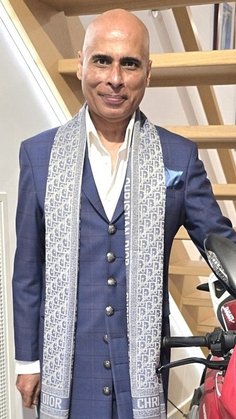
Restaurant Review
Michelin Marathon – Restaurant #05/22
Verdict in 30 Seconds
- Why go: One of Germany's finest dining experiences, combining Chef Tohru Nakamura's extraordinary creativity with deeply personalised hospitality, exceptional service, & cuisine of remarkable complexity and precision.
- Watch out for: The €289 premium wine pairing placing Tohru firmly for the special-occasion category. Reservations should be secured well in advance.
- Best moment: Being personally welcomed by name before reaching the dining room, followed by the kitchen tour and a dining experience where every detail felt thoughtfully considered and executed.
Introduction
Tohru Nakamura's eponymous restaurant, Tohru in der Schreiberei, opened in Munich's historic Old Town in
2021 and quickly established itself as one of Germany's leading fine dining destinations. Building on the success of his two-Michelin-starred work at Werneckhof by Geisel, Nakamura brings together Japanese precision, French technique, and exceptional Bavarian produce in a style that is uniquely his own.
The restaurant's ascent was rapid, culminating in the award of 3-Michelin stars in 2025, cementing both Nakamura's reputation among Europe's elite chefs and Tohru's position as one of Germany's premier gastronomic destinations.
Course Commentary
Hover over 'Photo No' against each dish to reveal a thumbnail of that dish. Clicking that will take you directly to the photo gallery of that dish.
1. Koshihikari (Photo 4)
An extraordinary opening course where perfectly cooked rice, white truffle and aged balsamic combined to create astonishing depth of flavour from seemingly simple ingredients.
2. Dim Sum (Photo 6)
A beautifully crafted parcel of Ozaki Wagyu whose rich, savoury flavours were complemented by pumpkin sweetness and the complexity of whisky-shoyu.
3. Pan Cristal (Photo 7)
A crisp shard of bread topped with encornets (squid) anchovy and XO sauce, delivering an intense burst of umami that far exceeded its modest appearance.
4. Tuna Toro (Photo 8)
Luxuriously rich toro elevated by layers of hazelnut, miso and acidity, creating a dish of remarkable depth, balance and precision.
5. Scallop (Photo 10)
A beautifully composed dish where the natural sweetness of scallop was enhanced by earthy artichoke and truffle notes, resulting in exceptional complexity.
6. Chawanmushi (Photo 11)
Silky steamed custard layered with red prawn, lentils and saffron, delivering comforting textures alongside surprisingly intricate and evolving flavours.
7. Turbot "Yuanyaki" (Photo 13)
Impeccably cooked turbot paired with caviar and layered umami elements, creating a dish of remarkable elegance, depth and precision.
8. Char Siu Lamb (Photo 14)
A beautifully tender lamb course where richness, acidity and subtle spice combined to produce complex yet perfectly balanced flavours.
9. Menchi Katsu (Photo 18)
Perhaps the most comforting dish of the evening, this visually understated creation combined smoked eel, shiitake and rich Albufera sauce to deliver deep umami flavours, exceptional balance and considerable depth.
10. Petit Fours (Photo 21)
Presented atop a display of moss personally grown by Fabiola, the petit fours provided a fitting conclusion to the evening. From the unexpected pairing of vanilla and caviar in the Purin to the bright freshness of the Pavlova, alongside the comforting richness of the Choux and the fruit-driven complexity of the Pâte de Fruits, each piece delivered the same precision, creativity and attention to detail that had characterised the menu from beginning to end.
11. Sweet Corn (Photo 23)
A visually striking dessert that transformed sweet corn into a sophisticated composition of remarkable complexity, where dried apricot, black walnut and quince beurre blanc created layers of sweetness, nuttiness and subtle acidity that unfolded with every bite.
The Entry
Housed within Munich's historic Schreiberei building, Tohru occupies the first floor of the striking Renaissance-era property whose richly decorated façade stands out among the surrounding streetscape. The exterior is characterised by geometric stonework, ornate window surrounds, and a prominent central arched portal that naturally draws the eye and appears to be the restaurants main entrance.
Despite the grand central doorway, guests attending Tohru will typically find the restaurant's dedicated entrance located on the right-hand side of the building through a much smaller and more discreet doorway. While it is possible to enter via the imposing central portal, doing so leads through another restaurant within the complex before reaching Tohru itself via a dedicated stairway. This slightly unexpected arrival sequence adds to the sense of discovery, as the understated side entrance reveals little of the world-class dining experience hidden within one of Munich's most historic buildings.
Welcome
The welcome at Tohru was nothing short of extraordinary. Before I had even reached the first-floor landing, I was met by four staff members, one of whom (I later learned was the restaurant manager, Bernd) greeted me warmly with, “Welcome to Tohru, Mr. Jinadasa.” Remarkably, this recognition came without any reference to a reservation list or a computer. I later learned that the team had taken the time to research me in advance, enabling a genuinely personal welcome that immediately made me feel valued and anticipated.
Following the greeting, I was invited into the kitchen for a customary tour led by chef Vincent, who provided a detailed explanation of the evening's progression and introduced the chefs responsible for the various courses. It was a thoughtful and highly engaging touch, made all the more impressive given the intensity of
service preparations taking place around us.
The tour concluded in the restaurant's main dining room with a capacity of approx. 38 guests, where I was once again seated at the prominent central table. The room combines historic architecture with contemporary furnishings, creating a warm and intimate atmosphere. Awaiting me was a handwritten card from Bernd, acknowledging my current Michelin marathon and welcoming me to Tohru. It was a thoughtful gesture that reinforced the remarkably personal nature of the hospitality.
All front-of-house staff were impeccably presented in tailored black suits paired with black T-shirts. While slightly less formal than a traditional shirt and tie, the look remained polished, contemporary, and well suited to the restaurant's style.
Menu
Fabiola, a charming member of the team with an excellent sense of humour, introduced herself and presented the evening's menu. The 9-course tasting menu and dessert selections were loosely bound in an elegant burgundy folding case embossed with the Tohru logo. Beyond the menu itself, the case contained additional
information on ingredient provenance, regional sourcing, and the various cuts of tuna featured throughout the experience.
Before proceedings commenced, I was offered a refreshing "Japanese Lemonade" cocktail, prepared tableside. Simple in concept, it proved to be a light and refreshing way to begin the evening.
Sommelier Chris, quiet and understated in his manner, then introduced himself and outlined the evening's wine pairing. His calm confidence immediately inspired trust, and I ordered the pairing without enquiring about the cost. Later, a card detailing the selected wines and their individual values was placed on the table, with some glasses priced as high as €49 per 0.1 lt (A$80). With seven wines included, it would prove to be the most expensive wine pairing I have encountered to date. I discuss the pairing in more detail in the wine section below.
Food Commentary
Every course was a demonstration of Chef Tohru’s remarkable ability to harness flavour through the precise combination of complementary ingredients. The dishes were visually stunning, while the complex layers of flavour added an element of mystery and discovery that made each course a genuine pleasure to experience. The extraordinary depth, complexity and precision of taste achieved in each dish cannot be overstated.
The attention to detail was extraordinary. Fabiola casually mentioned that the moss featured in the petit fours had been personally grown by her, a small but telling example of the care, dedication and personal touches that elevated the experience beyond the already exceptional cuisine.
Service Observations
The quality of the service was exceptional throughout the evening. Staff were friendly, confident, knowledgeable, and personable, with an efficiency that inspired trust and allowed guests to relax and fully enjoy the experience. More importantly, every member of the team appeared genuinely invested in the restaurant's culture and standards, creating a strong sense of confidence in the service.
The attention to detail extended well beyond the dining room. Sabrina, with whom I had corresponded during the booking process, made a point of stopping by my table and casually remarked that my original goal of dining at 10 Michelin-starred restaurants had now grown to 22. It was a small observation, yet one that demonstrated how closely the team had followed my journey and reinforced the highly personalised nature of the hospitality. Different staff presented different dishes, each demonstrating a thorough understanding of the ingredients and confidently delivering detailed explanations. While clearly well rehearsed, they responded to questions naturally and without hesitation.
Wine Pairing
The quietly spoken sommelier Chris, whose animated hand gestures quickly confirmed my suspicion that he was Italian, added a touch of theatre to the evening. From the way he poured each wine to occasionally transferring it between glasses for further aeration, his service was as entertaining as it was professional. Although white wines are not normally my preference, the pairing included a number of dry whites. One particularly unexpected pairing saw a red Nebbiolo served alongside the first rice course (Koshihikari). It was a combination I would never have chosen, yet it worked brilliantly. This willingness to challenge convention defined the pairing, with only one minor miss from the Bérêche et Fils Brut Réserve Champagne that didn't quite hit the mark.
Another memorable moment came with the 2021 Meursault-Perrières Premier Cru, served in a large-bowled glass. Assuming a smaller white wine glass might be more suitable, I casually questioned the choice. Chris simply smiled and returned with a second small glass for comparison. The difference was remarkable. The
larger glass delivered greater aromatic intensity, depth and balance, making the wine noticeably more expressive. It was a powerful reminder of how even the smallest details can transform a wine experience.
This attention to detail was further reinforced by Fabiola, whose knowledge demonstrated that such expertise extended across the wider team. By the end of the evening, I felt the €289 (A$480) wine pairing was fully justified.
Chef Interview
Following the conclusion of service, Chef Tohru generously set aside time for a casual, relaxed and wide-ranging discussion. Without any prepared questions or prior structure, our conversation covered topics including the pursuit of excellence at the three-star level, the influence of Michelin recognition on a restaurant, leadership within the kitchen, and the challenges of maintaining creativity while running one of Germany's most celebrated dining destinations.
Although the meeting was initially expected to last around 15 minutes, the conversation ultimately continued for more than 45 minutes. Chef Tohru was remarkably engaged throughout, answering questions with candour and depth while sharing personal insights from his career and experiences. It was a rare opportunity to step
beyond the dining experience itself and gain a deeper understanding of the philosophy and dedication that underpin the restaurant's success. A transcript of this interview will be published on my website shortly
Overall
Tohru delivered one of the most complete fine dining experiences of my Michelin Marathon thus far. While the cuisine was the undeniable highlight, the experience extended far beyond the food itself. From the extraordinarily personalised welcome and kitchen tour to the warmth, confidence and professionalism displayed by every member of staff, it was evident that hospitality is embedded deeply within the restaurant's culture.
Chef Tohru's cuisine demonstrated an exceptional mastery of flavour, with each dish revealing remarkable complexity, precision and balance. Combined with an adventurous and expertly curated wine pairing, every course felt both intellectually engaging and deeply enjoyable. What ultimately distinguished Tohru Restaurant, was its attention to detail. Whether it was a handwritten welcome card, the team's familiarity with my Michelin Marathon, or the willingness to demonstrate the impact of different glassware on a wine, countless small touches combined to create something truly memorable.
3-Michelin stars represent the highest accolade the guide can bestow, and after experiencing Tohru firsthand, it is difficult to argue that Tohru Restaurant is anything less than deserving of that distinction. Among Germany's elite dining destinations, Tohru stands comfortably in the top tier and is a restaurant I would gladly return to in the future.
Have you dined here? Was your experience the same? Love to hear your comments. Next stop: #06
Experience Score
- Reservation Process
- 8.5/10
- Welcome
- 10/10
- Atmosphere
- 10/10
- Room Decor
- 9/10
- Food Theatre
- 9/10
- Food Presentation
- 10/10
- Food Taste
- 10/10
- Food Portions
- 9.5/10
- Dinnerware
- 9.5/10
- Attentiveness
- 10/10
- Service
- 10/10
- Staff Knowledge
- 10/10
- Staff Attire
- 8.5/10
- Passion
- 10/10
- Sommelier
- 10/10
- Wine Pairing
- 9.5/10
- Guest Dress Std
- 8.5/10
- Value
- 8.5/10